Mark Tran
The queue at a bargain department store’s cashier check-out was long, with impatient consumers standing in it. A lady was holding up the line: she had money in her hand and was attempting to match the shopping bill. “This has to go, this, and this,” she ordered the cashier, as her little son looked on in disbelief as the items he had chosen were tossed out. “I want the pants,” he said. “There aren’t enough,” she said.

I saw the aforementioned scenario while purchasing bed linens from the store. This is a common narrative all throughout the world, as individuals feel the pinch of the present economic crisis. As human rights advocate Gamal Eid recalled an exchange he observed between a lady and a ful and falafel street vendor, the crisis affected Egypt’s impoverished population especially hard. Ful, or fava beans, is regarded as a low-cost staple in the diet of many Egyptians. The lady intended to split 6 Egyptian pounds ($0.32) evenly between ful and falafel, but the dealer said 3 pounds could only purchase her falafel, not ful. The altercation between the two occurred against the backdrop of a radio presenter hailing “Egypt’s economic development.”
Poverty was guaranteed to Egyptians when the present administration gained control nearly nine years ago. Dictator Abdel-Fattah El Sisi requested in 2014 that Egyptians “be patient with [him] for two years and hold [him] responsible.” He claimed in 2015 that “two more years and you would be shocked by how Egypt turned out to be.” This page explains what went wrong and why these promises were never fulfilled.
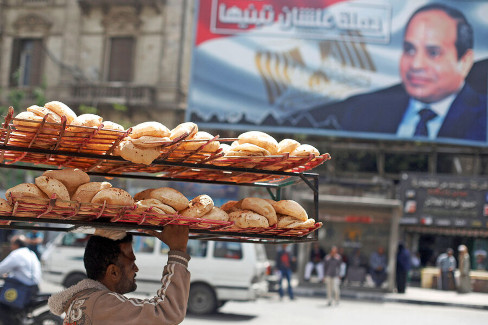
When it came to the severe austerity measures, Egypt remained to the deal. Subsidies for most energy items were phased out by 2019, and the average power cost for the low and middle classes soared by 271 percent between 2011 and 2017-2018. To keep the subsidized price of a loaf of bread at 5 piasters ($0.0027) while secretly lowering the subsidy cost, the government reduced the weight each loaf from 110 grams in 2016 to 90 grams in 2020. Prior to that, the weight of a loaf of bread stayed constant at 130 grams from 1988 to 2013.
Military-owned businesses are squeezing out the private sector in a way not witnessed since the military takeover in 1952. It was revealing to witness the civilian administration try to establish legislation to stimulate investment while the military undermined those same efforts by posing unfair competition to the same investors the government was attempting to attract. Military-owned businesses enjoy a variety of benefits that regular businesses do not: they do not pay taxes, have limitless property ownership rights, and some utilize conscripts as labor.
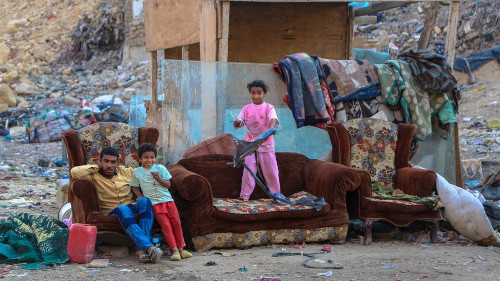
This unconventional business climate, along with other disadvantages such as a poor commercial judicial system, a lack of transparency, and the persistence of red tape in founding and managing enterprises, has had a detrimental impact on the economy. Participation in the labor force has continuously declined from 47 percent in 2015 to 41 percent in 2021. For the great part of the last five years, the non-energy private sector has been in contraction, and foreign direct investment outside the energy sector has been underwhelming, certainly not at the levels envisioned by the IMF when it began the reform program with Egypt in 2016.
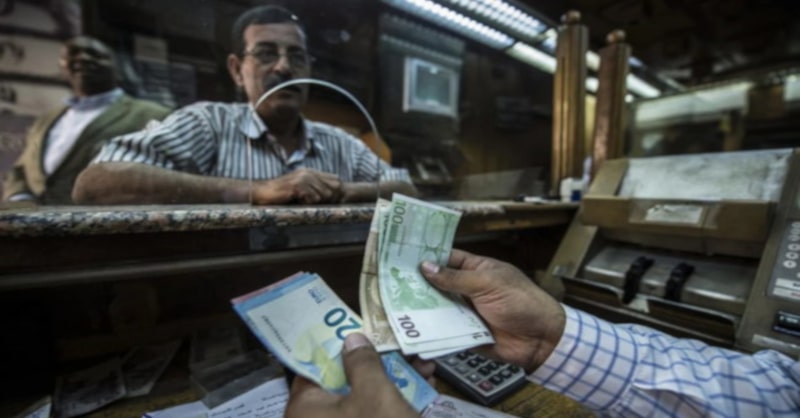 Egypt's pound falls to a historic record versus the US dollar.