Mark Tran
Egypt’s total debt has risen by 93 percent in just five years and debt service is expected to increase by 62 percent from the financial year 2020/2021 to 2023/2024. In the 2022/2023 budget, debt accounted for nearly 50 percent of expenditure.
In other words, Egypt is borrowing just to survive and the only way to meet those debt obligations is to borrow more.
Even within the limited constraints within which the Egyptian parliament operates, it is clear that the jig is up. According to one MP’s comments, “[T]he government does not have a vision to stop borrowing, or to limit the use of borrowing to close the deficit and increase resources.”
What about the economic fundamentals? The explanation is that such basics have been progressively eroded in the ten years since the country’s military takeover.
Egypt’s foreign currency sources are limited. Suez Canal earnings and international tourists have always been the two primary sources of revenue. Both have taken a beating, first from insecurity, then from the Covid-19 epidemic, and now from the Ukraine war.
Meanwhile, the government has squandered enormous potential to improve, modernize, and grow the economy.
Instead of expanding the private sector, which may have a negative impact on real GDP, the government preferred to concentrate all economic activity in the hands of the military. Today, the military is involved in virtually every aspect of Egyptian economic life, including the media, entertainment, cuisine, hospitality, construction, and so on.
The end result? Egypt is not a business-friendly country. Indeed, the private sector is on life support, if not already dead.
Meanwhile, the military, led directly and personally by President Abdel Fattah el-Sisi, has focused on megaprojects that have little bearing on economic growth.
The new “Administrative Capital City” sprouting in the desert has sapped the economy of $55 billion. A useless enlargement of the Suez Canal took out another $9 billion with no income growth.
It’s not difficult to figure out how we got there. First, the dictatorship took a monetary and fiscal route that had little to do with economic expertise. Second, the IMF and other foreign powers have praised him and his economic policies.
Third, an estimated $45 billion was spent on military purchases with no evident geopolitical danger or necessity. Egypt, a financially indebted country with substantial poverty, became the world’s third-largest weaponry importer between 2015 and 2019. In contrast, expenditure on critical areas like as health and education is persistently lower than even legally mandated minimums.
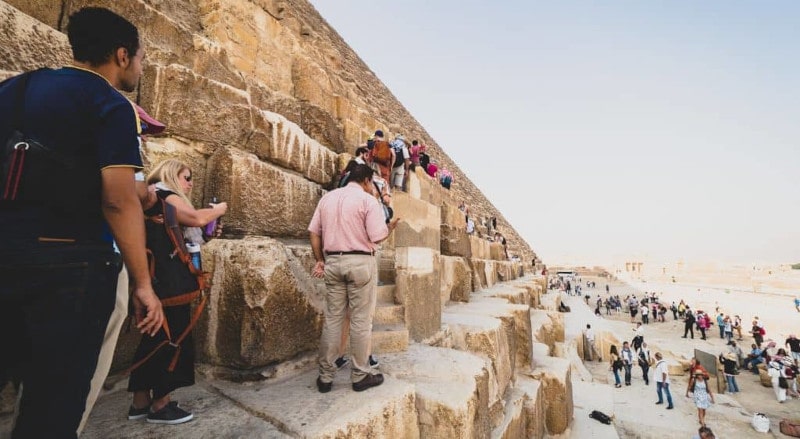 The tourism sector is suffering due to an attack on a police roadblock in Egypt's Ismailia area.