Mark Tran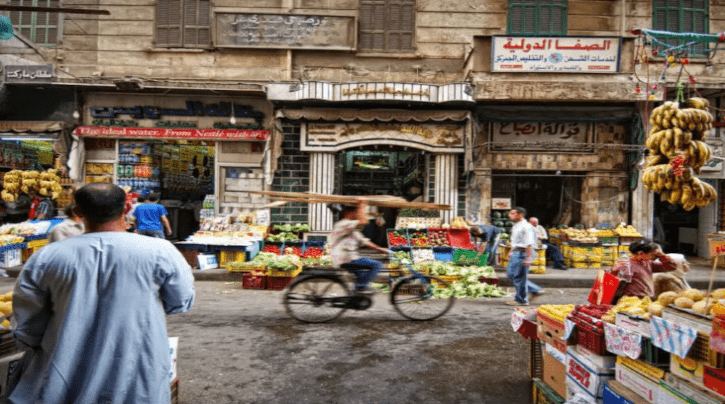
Visiting Egypt? A friendly caution to think twice, based on firsthand experience.
Will and I just returned from our “once in a lifetime trip” to Egypt and hot damn, we spent two weeks in the country and couldn’t get out fast enough. When asked by family and friends about the trip, the only response I can muster is :
“Why the hell did I spend money to visit Egypt? I can’t believe I paid money to be treated like this.”
But let’s take a step back because a charged statement like that deserves some explanation.
Here’s the thing, as a professional travel blogger it’s in my best interest to encourage folks to travel the world, discomfort be damned. But as a human being, I can’t honestly recommend visiting Egypt during this time because of the experiences we had during our trip.
We visited Egypt with an open mind but came away sorely disappointed. All told, we agreed that we could have lived our entire lives without stepping foot in Egypt as tourists, and wouldn’t have been worse off for it.
Why I Don’t Recommend Visiting Egypt

Visiting Egypt feels like a rite of passage for travelers, but the country is falsely glorified.
Prior to our trip, we pored over books, guides, blogs, and videos, yet nothing prepared us for reality. We knew that the pyramids and ancient sites of Egypt were high on every traveler’s list and never once questioned the tourism industry in Egypt, which seemed to be the lifeline of the country.
What a mistake that turned out to be. You can learn from my mistake, see below.
At this point, you can probably guess who the next president was. Enter Abdel El-Sisi, elected president in 2014. Sisi rules with an iron fist! (following Mubarak’s authoritarian regime) and is described as being more strict than Mubarak.
Hell, a 24-year-old tourist from Lebanon was arrested at the airport! in 2018 and sentenced to 8 years in prison because she posted a 5-minute video talking about her poor experience visiting Egypt.
Visiting Egypt for the epic sites? A word, please
There’s no denying that nothing comes close to seeing the ruins of Ancient Egypt for yourself. I’ll be the first to admit that! And hell, I’d put up with a lot to see these epic sites for myself, which is why the next statement is particularly heartbreaking.
To be frank, the history of Ancient Egypt isn’t valued by those managing the country. I was shocked to find that everything at the Egyptian Museum was out in the open and folks were allowed to touch whatever they pleased.
But that wasn’t the worst of it. No, what surprised me most was the blatant and unabashed corruption at the ancient sites folks travel thousands of miles to see. I can’t tell you how many times I watched “guards” pop into thousand-year-old coffins for tips. I cringed while watching a guard dip into a roped-off thousand-year-old sarcophagus for photos and a tip equating to a measly $2.
Egypt sells itself as a top tourist destination, but it’s really not. Like, at all.
My biggest beef with visiting Egypt is that I assumed it was a tourist destination. As mentioned, every world traveler knows to visit the pyramids — it’s a bucket list destination unlike any other! As such, it’s easy to assume that Egypt is a tourist destination, but it’s not.
To put it bluntly, I felt like a walking ATM while visiting Egypt. It seemed to me that, as a tourist, the main objective was to get as much money from me as possible. The level of tourist exploitation is absolutely next level.
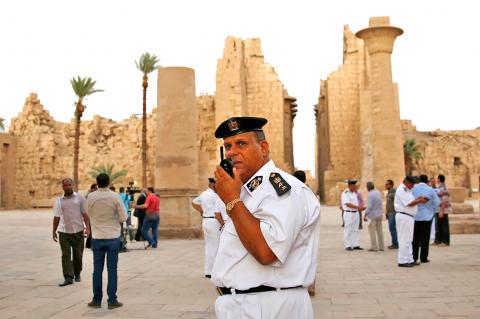
The police are corrupt and demand bribes

The biggest reason I never plan on visiting Egypt again is because I felt unsafe. There, I said it.
Even as I write this I feel so frustrated because almost all blogs I came across claimed that Egypt is safe. I’m calling BS. The ONLY way visiting Egypt will feel safe is if you have a hired tour guide and driver with you at all times. Having a guide with you at all times will provide a sense of safety, for sure, but it’s the most “sanitized” way to visit a place. You’ll never experience the way people in the city live.
If you don’t feel safe walking the streets in broad daylight (which I didn’t) then the city isn’t safe. And I’ll be honest with you, I didn’t feel safe visiting Egypt (even though I was traveling with my husband) and can’t imagine what it would be like to travel as a solo female.
The harassment was nonstop!

Egypt is an impoverished country, there’s no two ways about it. As such, people will do anything in their power to earn something, anything, and will offer things or services you probably don’t need.
One of the biggest problems with visiting Egypt, for the average tourist, is that no doesn’t mean no. Rather, no is a form of engagement, which means all bets are off.
The aggression with which folks tried to sell stuff and demand payment was next level. For example, we were touring a temple and one man approached us and motioned at a wall we were currently looking at and then demanded a tip. He didn’t say a single word, simply pointed from his eyes to the wall and made the motion for money.
We said no and kept walking and thankfully he didn’t follow us. Although he came back later with a vengeance and demanded a tip because we were using our tripod (which was allowed). Again, we said no and left the temple altogether, half expecting him to demand a tip for departing too.
The harassment we faced while visiting Egypt was nonstop, it’s hard to describe in words. From the second we left the car until we returned to the hotel, we were stopped every five seconds by someone selling something. It doesn’t matter who — taxi drivers, camel riders, folks offering tours, kids selling trinkets, bathroom attendants, etc.
It was unrelenting and we couldn’t even take in the sites, for fear of making eye contact with someone, which we learned was a mistake early on.
Indeed, eye contact and speech (“no, thank you”) were perceived as engagement and we’d be followed several feet, with the demands getting more aggressive with each step. It was a lot to handle and we found ourselves mostly hotel-bound by the third day of our trip.
Take note: If you’re using a public restroom (near popular sites) expect to tip for toilet paper. Most bathrooms don’t stock toilet paper, so you’ll need to tip the attendant and she’ll probably give you three sheets at best. Better yet, carry your own toilet paper while visiting Egypt.
The taxi situation was a nightmare.

We were so grateful for Uber while visiting Cairo, but unfortunately, the other cities don’t have Uber. Both Luxor and Aswan have a service called Careem (which is owned by Uber) but after one experience with the app, we refused to use them.
If you’re visiting Egypt, you’ll want to set up car services through your hotel because taxis don’t have set rates. If you use a taxi while visiting Egypt then you will be at the mercy of the taxi driver, who will try to get as much money from you as possible.
Even professional tour guides, hired through a hotel, will try to get you to buy overpriced trinkets.

During our first few days of visiting Egypt, we realized the importance of a professional guide. It’s worth mentioning that we’ve NEVER hired professional guides during our travels before, but Egypt was a wild card. We were swindled by an “Egyptologist” that approached us on the street near the famous market and started offering his services for free.
This was our first day in Egypt so we didn’t know better (haven’t been burned). At first, we enjoyed his knowledge and signed up for the full-day tour. We had a great time and hired him for a second day as well and then things started to get weird.
He showed us two cool mosques in the morning and then we hopped in a taxi that took us 40 minutes out of the city center to some chain restaurant (that was also located two blocks from our apartment).
We started to get a weird vibe about the whole situation and requested to return to our hotel after the meal. He got really weird about it and didn’t want to let us go, asking to take us shopping for souvenirs instead. We declined the offer and demanded to be taken back to the hotel.
Needless to say, we learned our lesson and only booked tours through hotels from that point forward. The problem? Every single one of the guides we booked took us to some souvenir shop to show us how “real alabaster” or “real maps” or “real papyrus” was made. It’s a whole production! The shopkeep spends 20 minutes pulling out all the stops, which makes leaving empty-handed super awkward and uncomfortable.
Stomach issues are super common while visiting Egypt

Finally, let’s discuss the last reason I won’t be visiting Egypt again. Granted, this is the most inconsequential reason.
First, Egyptian food leaves much to be desired. Folks love to make it seem like Egyptian food is “exotic” and “mind-blowing” but in reality, the unofficial national dish of Egypt is a random mish-mash of various noodles topped with tomato sauce and fried onion. It’s pretty good, but not an earth-shattering foodie moment by any stretch of the imagination.
But the lack of interesting food isn’t the issue, not even close. Rather, it’s the super common stomach issues that travelers develop while visiting Egypt.
A few days into our trip we were both waking up with odd stomach pains, even though we were super vigilant about what we ate. We stuck to beers and hotel food because the conditions of street food were questionable at best.
We had two meals in Cairo and found ourselves swatting flies while stray dogs walked about. After we started waking up with stomach issues we found ourselves on guard and cut back to two light hotel meals a day.
Take note while visiting Egypt: levels of cleanliness are low compared to Western standards. It doesn’t seem that proper cleaning protocols are followed. Heck, I used a restroom in one restaurant and it didn’t have toilet paper at all.
The worst part? The bar of soap was tiny (down to half an inch) and obviously old. The thought of the servers using the bathroom throughout the day made me nauseous.
 Egypt regime is responsible for the murder of Italian tourist Giulio Regeni